

BriGRETE Goes to Researchers’ Nights Across Europe
- fraudline16
- Oct 2, 2025
- 1 min read


This year, our project proudly took part in Researchers’ Night celebrations across Europe, an event dedicated to bringing science and research closer to society. From lively conversations with curious students to inspiring discussions with educators and families, we had the privilege to share our work with the next generation of researchers.
Inspiring Future Researchers
Meeting young people who are already curious about the world of science was a rewarding experience. We were delighted to showcase our project, explain its goals, and answer their thoughtful questions. It was not only about presenting research, it was about sparking curiosity, encouraging critical thinking, and showing that integrity and responsibility are central to good science.
Discussing Research Integrity
One of the most meaningful aspects of our participation was opening a dialogue about integrity in research through our “Ethics Wheel of Fortune” game. We believe that research is not only about generating new knowledge, but also about ensuring that this knowledge is trustworthy, transparent, and beneficial to society. By discussing values such as honesty, accountability, and respect in science, we aimed to highlight how integrity forms the foundation of sustainable and impactful research.
Looking Ahead
The enthusiasm we witnessed at the European Researchers’ Night reassures us that the future of research is in good hands. Engaging with students, educators, and the public reminded us of the importance of keeping integrity at the heart of our work. We look forward to continuing this journey, sharing our project, building awareness, and supporting a culture of responsibility and trust in research.
Highlights from our participation
Athens, Greece
Larisa, Greece
Bucharest, Romania
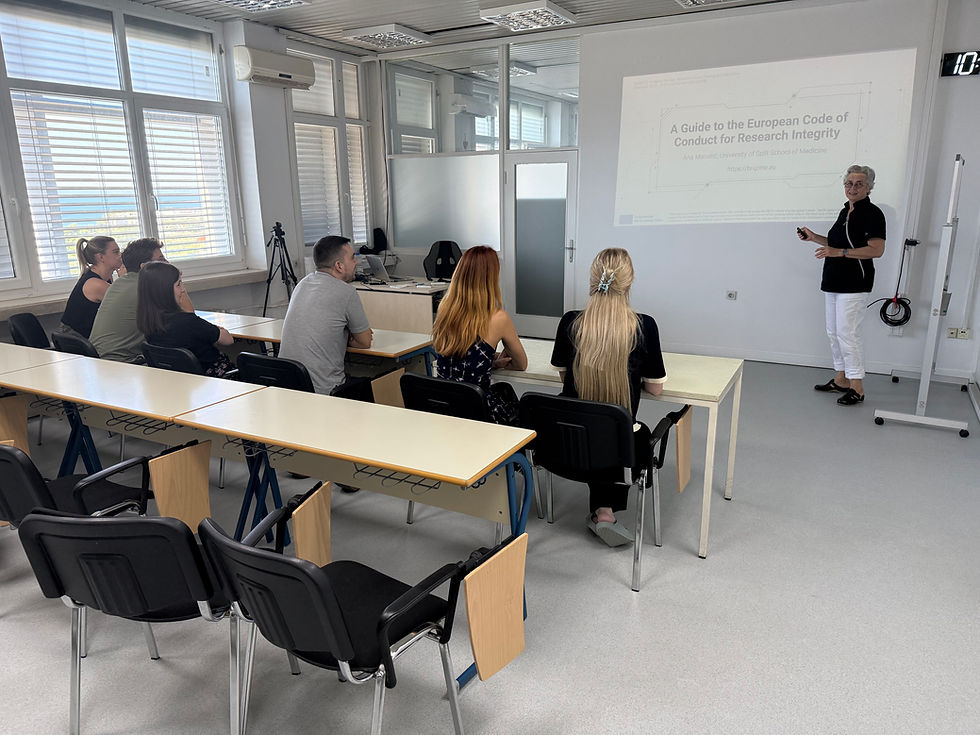
Split, Croatia
Coimbra, Portugal
Sofia, Bulgaria


Comments